Blepharoplasty
Blepharoplasty, or eyelid surgery, addresses excess skin, muscle and fat of the upper and/or lower eyelids. Upper blepharoplasty can improve a hooded appearance and, in select cases, visual field obstruction; lower blepharoplasty addresses under-eye bags, puffiness and hollowing.
Also known as: Eyelid surgery, Upper blepharoplasty, Lower blepharoplasty
Am I a candidate?
- Adults with excess upper eyelid skin causing hooding or impaired peripheral vision
- Adults with lower eyelid fat pads, puffiness or under-eye bags
- Those with good overall eye health and no active eye conditions
- Most commonly suitable from age 30 and above
The procedure
- Performed under local anaesthesia with sedation, or general anaesthesia, as a day procedure
- Upper eyelid incisions placed within the natural eyelid crease for discreet scarring
- Lower eyelid via a transconjunctival (inside the lid) or external skin incision
- Excess skin, muscle and fat removed or repositioned; ptosis repair if eyelid droop affects function
- Upper and lower blepharoplasty are often combined for comprehensive eyelid rejuvenation
Recovery
- Return to work in 7–10 days; swelling and bruising settle over 1–2 weeks
- Sutures removed at around 5–7 days; sleep elevated for the first week
- Avoid eye makeup, rubbing and contact lenses for around 2 weeks
- Follow-up appointments at 1 week and 6 weeks; final results at approximately 3 months
Risks & considerations
Potential risks include dry eyes, infection, asymmetry, over- or under-correction, ectropion (outward turning of the lower lid), and rare changes in vision. Pre-existing eye conditions may increase risk. Risks are reduced through precise technique and thorough pre-operative assessment.
Medicare & rebates
Medicare rebates may apply where functional impairment, such as documented vision obstruction, is present. Purely cosmetic cases are not covered.
Medicare item numbers and eligibility criteria are set by the Australian Government and can change or be revised over time. Your current eligibility is confirmed at your consultation.
Clinical photographs
Educational onlyFor privacy, photographs are blurred by default. Click to view; click again to move through the angles.
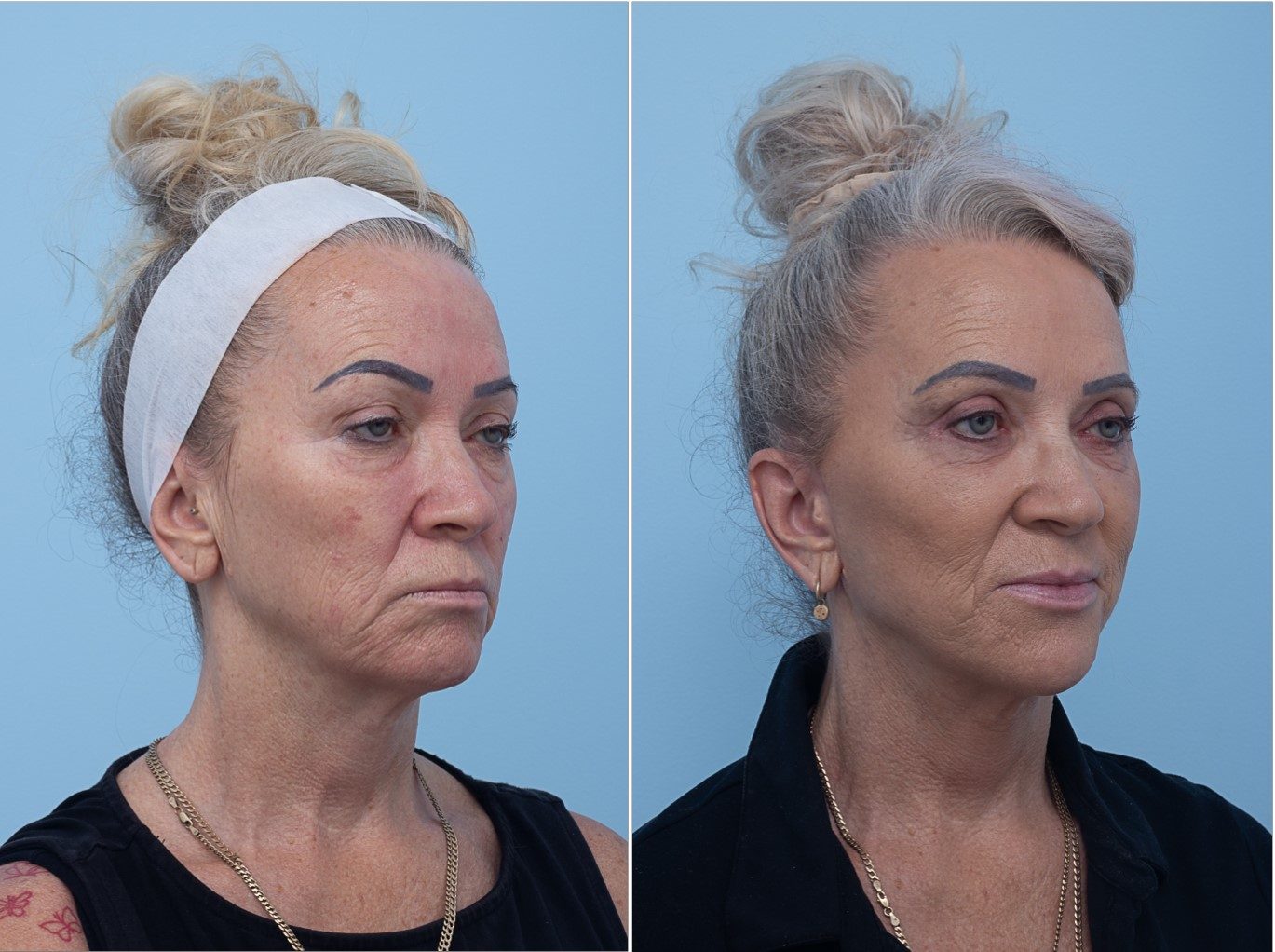
These photographs are published for general educational purposes only and do not constitute medical advice or a guarantee of any particular outcome. Unless otherwise stated, images are taken approximately 3 months after surgery; at this stage scars can still look red and darker, which varies with skin type. Over time they typically settle into a fine line that is usually paler than the surrounding skin, and the final shape settles with time — the timing and final appearance vary with skin type and ethnicity. Every patient is different and individual results vary. All surgery carries risks, and you should seek a second opinion from an appropriately qualified health practitioner. Images are published with the patient’s written consent and have not been altered to misrepresent results. A consultation with Dr Livingston is required to determine your suitability for any procedure. Dr Ryan Livingston is an AHPRA-registered Specialist Plastic Surgeon (MED0001523680).
Frequently asked questions
Is blepharoplasty covered by Medicare or insurance?
A rebate may be possible for functional cases where vision is impaired and documented. Cosmetic-only cases are not covered. Eligibility is assessed during consultation.
Will there be visible scars?
Scarring is minimal. Incisions are hidden within the natural eyelid crease, the lash line, or inside the eyelid (conjunctiva).
When can I drive after eyelid surgery?
Typically after about 1 week, or once vision clears, as advised by Dr Livingston.
How long until bruising resolves?
Bruising usually fades within 1–2 weeks.
This information is general in nature and does not constitute medical advice. Any surgical or invasive procedure carries risks; you should seek a second opinion from an appropriately qualified health practitioner. Individual results vary. A consultation with Dr Livingston is required to determine your suitability for any procedure. Dr Ryan Livingston is an AHPRA-registered Specialist Plastic Surgeon (MED0001523680).