Surgical Procedures
Dr Livingston offers a comprehensive range of plastic and reconstructive surgical procedures. Each treatment is individually tailored following thorough consultation and assessment.
Any surgical or invasive procedure carries risks. Before proceeding with any procedure, you should seek a second opinion from an appropriately qualified health practitioner. Individual results may vary.
Educational cases
Some educational cases are displayed here. Each photo is blurred by default — tap to view, then tap again to move through the angles. These are general educational examples only and individual results vary. For the full list of procedures, browse the Face & Neck, Body and Breast tabs below.
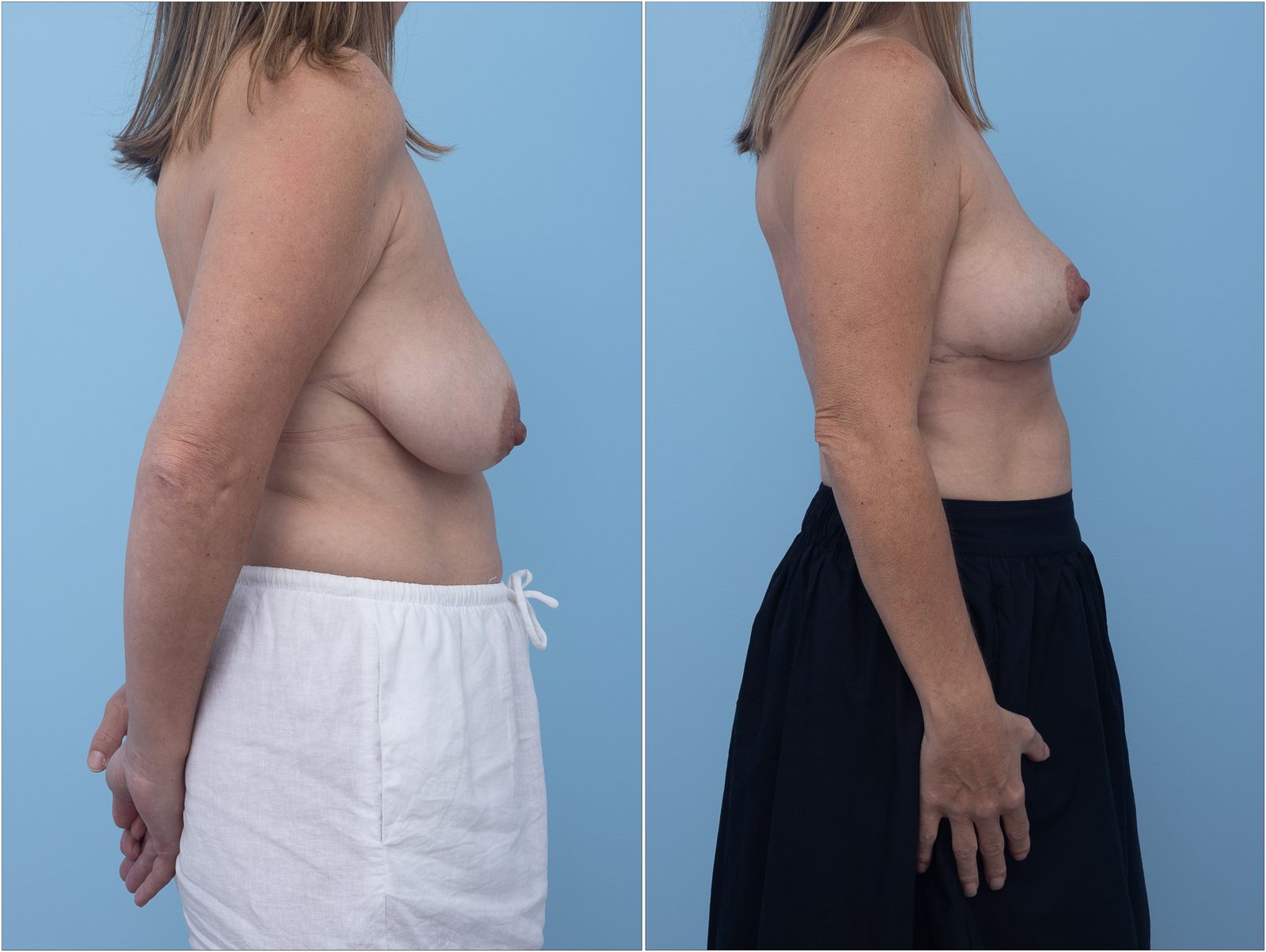
The patient shown had a combined breast lift and reduction. Photograph taken approximately 3 months after surgery. At this stage scars can still appear red and will continue to fade towards a paler, finer line over the following months, and the final shape settles with time. Every patient heals differently and individual results vary.
Breast Reduction
Breast reduction surgery reduces breast size by removing excess tissue, fat, and skin, often relieving associated physical symptoms while improving proportion.
Ideal Candidates
- Women experiencing back, neck, or shoulder pain, or skin irritation from large breasts
- Those with stable weight, non-smokers, with a BMI appropriate for safe surgery
- Adults post-development with disproportionate breast size
Procedure Overview
- Performed under general anaesthesia; approximately 2–4 hours depending on volume
- Anchor or lollipop incision patterns to remove tissue and reshape the breasts
- Nipple and areola repositioned; sensation is often preserved
- Liposuction may assist contouring where appropriate
- Hospital stay: typically 1–2 nights
Recovery & Aftercare
- Off work for approximately 2 weeks; no heavy lifting for 6 weeks
- Supportive bra worn for 4–6 weeks; drains removed around day 2–3
- Scars typically fade over 12–18 months with appropriate scar care
- Follow-up appointments at 1–2 weeks, 6 weeks, and 3 months
Risks & Considerations
Risks include poor wound healing, asymmetry, infection, or changes in nipple sensation. These are balanced by specialist expertise and thorough pre-operative planning. Medicare and private health insurance rebates may apply for symptomatic cases.
Common Questions
Will breastfeeding be possible afterwards?
Breastfeeding may be affected. This is discussed in detail during your consultation.
What size will I be?
Final size is personalised based on your goals, body proportions, and anatomy.
Are the scars noticeable?
Incisions are placed discreetly and typically improve significantly over time with appropriate care.
This information is general in nature. A personal consultation with Dr Livingston is essential to assess your suitability and discuss individual goals.
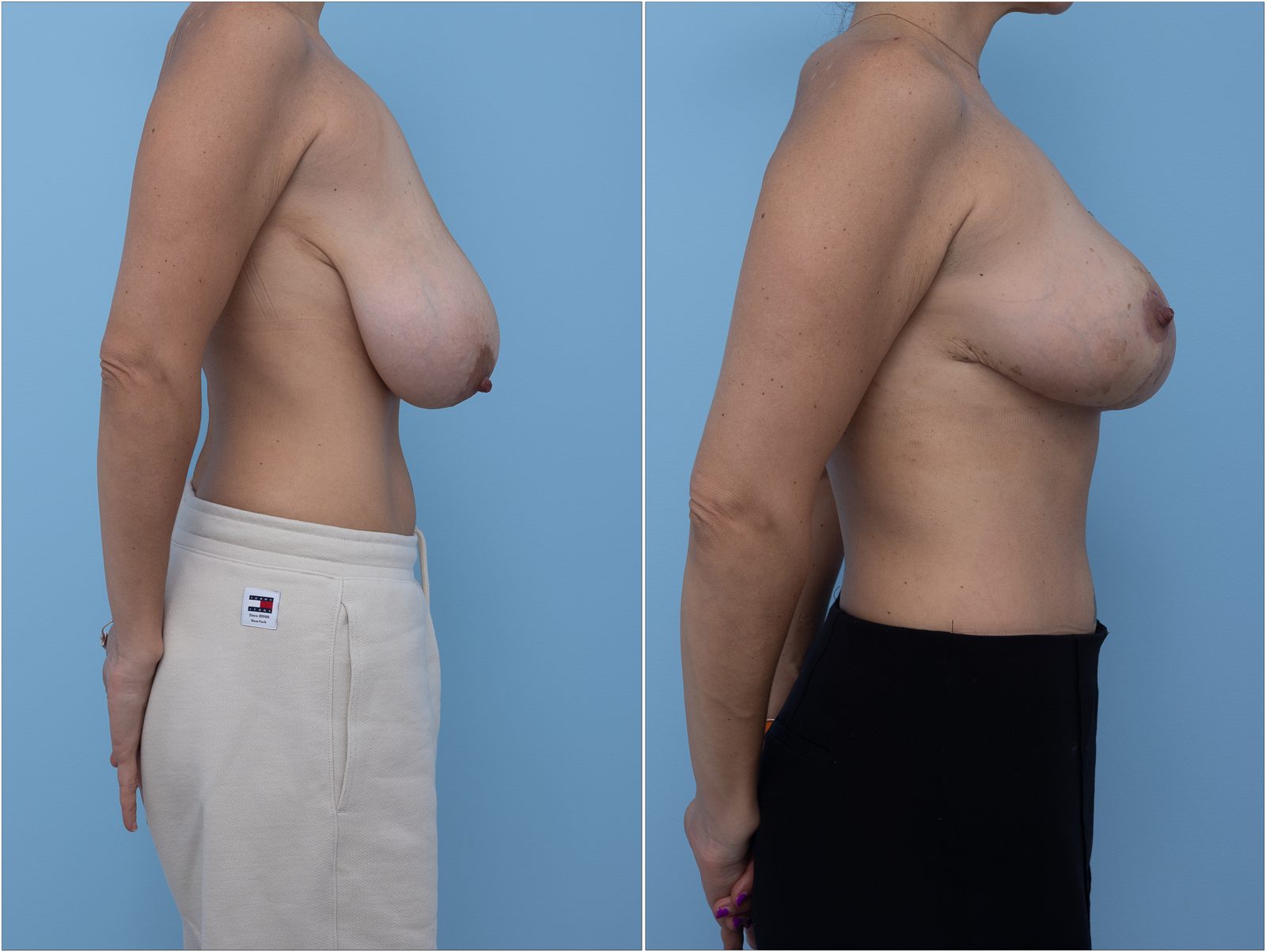
Patients shown had a mastopexy (breast lift), with a reduction component. Photograph taken approximately 3 months after surgery. At this stage scars can still appear red and will continue to fade towards a paler, finer line over the following months, and the final shape settles with time. Every patient heals differently and individual results vary.
Breast Lift (Mastopexy)
Breast lift surgery addresses breast ptosis (sagging) by removing excess skin and reshaping the breast tissue to a lifted position.
Ideal Candidates
- Women with breast ptosis — nipple position below the breast fold
- Post-lactation or age-related breast sagging
- Healthy individuals without unrealistic size expectations
Procedure Overview
- General anaesthesia in an accredited facility
- Wise pattern (anchor) or lollipop incision depending on degree of ptosis
- Excess skin excised; breast tissue reshaped and repositioned
- Nipple–areola complex repositioned; closure in layers
Recovery & Aftercare
- Supportive bra worn for 4–6 weeks
- No strenuous exercise for 4 weeks
- Scars typically fade over 12 months with appropriate care
- Breast shape stabilises at approximately 3 months
Risks & Considerations
Risks include scarring, nipple loss (rare), asymmetry, recurrent ptosis, altered nipple sensation, and wound healing complications. Smoking delays healing significantly.
Common Questions
Can it be combined with implants?
Yes — augmentation-mastopexy is possible and is discussed during consultation.
What scar patterns are used?
Periareolar, vertical (lollipop), or anchor patterns depending on the degree of ptosis.
Does Medicare cover a breast lift?
No rebate applies for cosmetic mastopexy.
This information is general in nature. A personal consultation with Dr Livingston is essential to assess your suitability and discuss individual goals.
Upper-eyelid surgery — the incision sits in the natural lid crease where the scar is well concealed. Photograph taken approximately 3 months after surgery. At this stage scars can still appear red and will continue to fade towards a paler, finer line over the following months, and the final shape settles with time. Every patient heals differently and individual results vary.
Upper Blepharoplasty
Upper eyelid surgery addresses excess skin and fat on the upper eyelids, potentially improving a hooded appearance and, in select cases, visual field obstruction.
Ideal Candidates
- Adults with excess upper eyelid skin causing hooding or impaired peripheral vision
- Those with good overall eye health and no active eye conditions
- Suitable for ages 30 and above, often combined with brow concerns
Procedure Overview
- Performed under local anaesthesia with sedation or general anaesthesia as a day procedure
- Incision placed within the natural eyelid crease for discreet scarring
- Excess skin, muscle, and fat are removed or repositioned
- May include ptosis repair if eyelid droop affects function
- Duration: approximately 45–90 minutes per eye
Recovery & Aftercare
- Return to work in 7–10 days; swelling and bruising resolves in 1–2 weeks
- Prescribed eye drops and ointments; sleep elevated for the first week
- Avoid eye makeup and rubbing for 2 weeks; no contact lenses for 2 weeks
- Follow-up appointments at 1 week and 6 weeks
Risks & Considerations
Potential risks include dry eyes, infection, asymmetry, over- or under-correction, or rare vision changes. Risks are reduced through precise technique and thorough pre-operative assessment. Medicare rebates may apply where functional impairment (such as vision obstruction) is documented.
Common Questions
Does it address crow's feet?
Upper blepharoplasty targets hooding only. Complementary treatments for crow's feet can be discussed in consultation.
Is it covered by insurance?
Possible for functional cases where vision is impaired. Eligibility is assessed during consultation.
When can I drive?
Typically after 1 week or when vision clears, as advised by Dr Livingston.
This information is general in nature. A personal consultation with Dr Livingston is essential to assess your suitability and discuss individual goals.
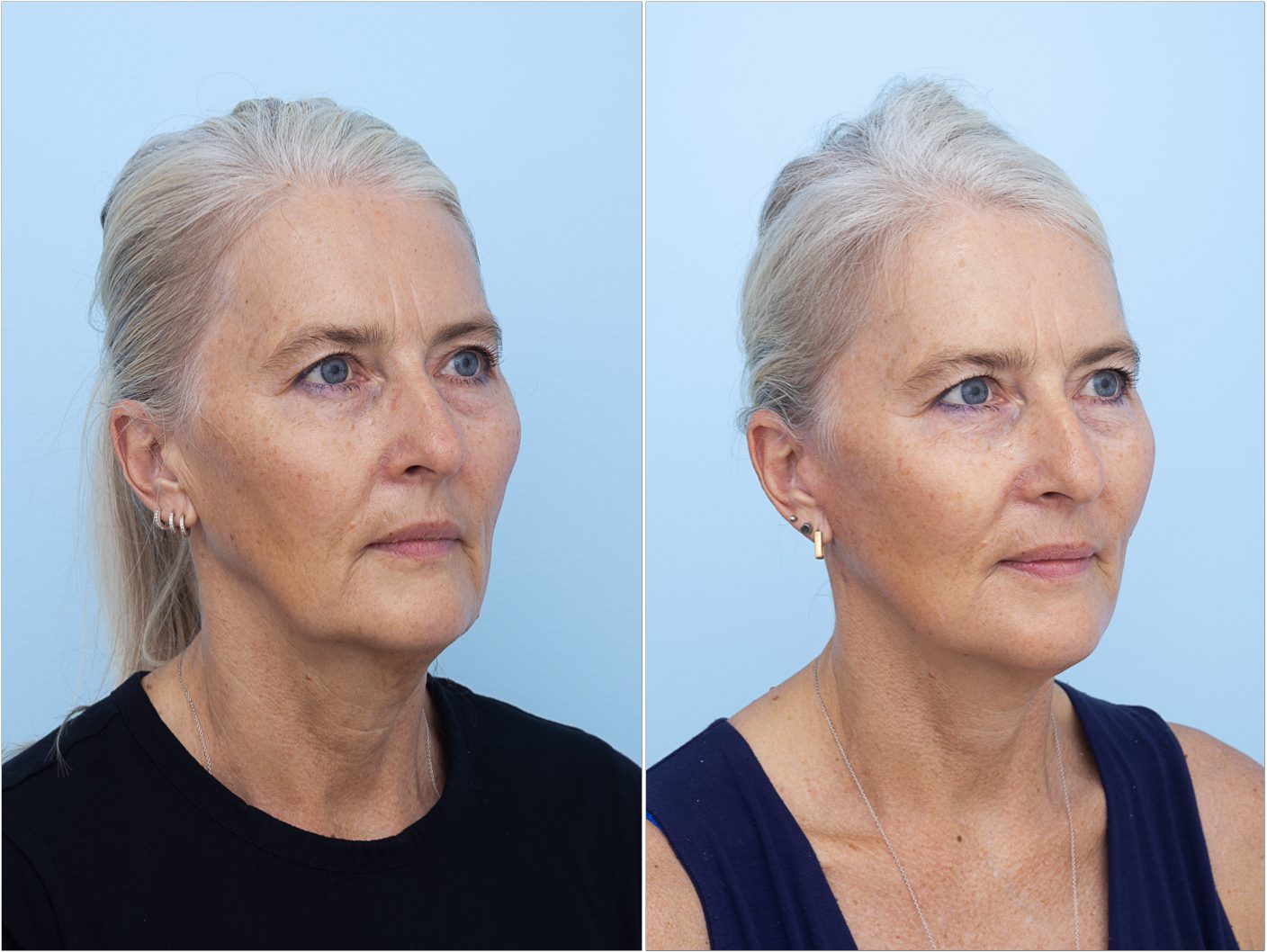
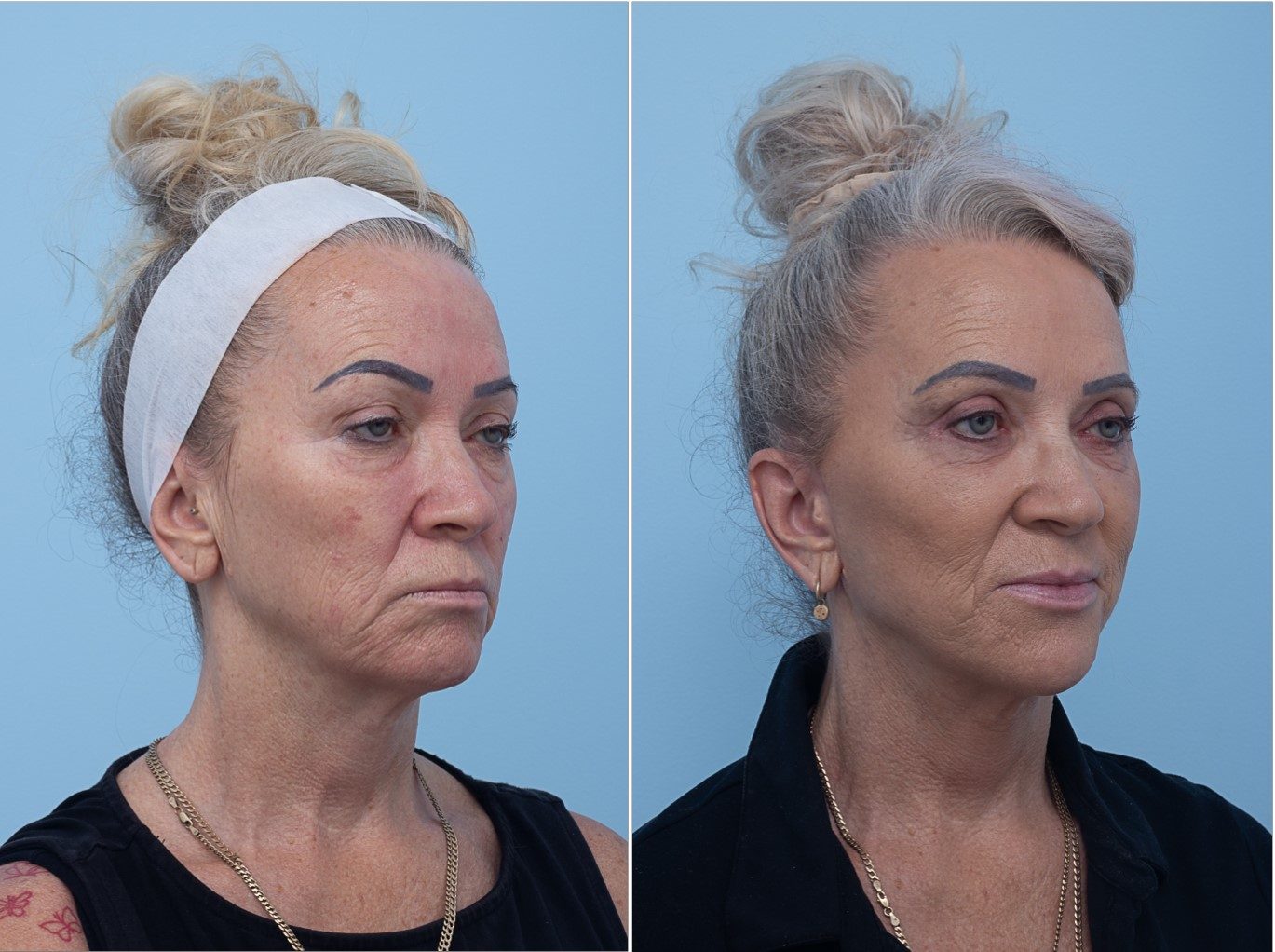
Photograph taken approximately 3 months after surgery. At this stage scars can still appear red and will continue to fade towards a paler, finer line over the following months, and the final shape settles with time. Every patient heals differently and individual results vary.
Mini Facelift
A targeted surgical option for patients with early signs of facial ageing, focusing on the lower face and jawline using shorter incisions for a potentially shorter recovery compared to a full facelift.
Ideal Candidates
- Patients with mild to moderate jowling, skin laxity, or early jawline definition loss
- Those seeking subtle rejuvenation without extensive downtime
- Non-smokers in good general health, with realistic expectations discussed in consultation
Procedure Overview
- Performed under general or local anaesthesia with sedation as a day or overnight procedure in an accredited facility
- Short incisions (typically around the ears) allow access to underlying tissues for repositioning and tightening
- Excess skin is removed, and deeper layers may be adjusted for improved jawline contour
- Often combined with neck liposuction or other procedures for customised results
- Surgery duration: approximately 1.5–2.5 hours
Recovery & Aftercare
- Most patients resume light activities in 7–10 days; full recovery in 2–4 weeks
- Expect swelling and bruising (peaks at 3–5 days), managed with cold compresses and prescribed medications
- Light compression garment worn initially; avoid strenuous exercise for 4 weeks
- Follow-up appointments at 1 week, 1 month, and 3 months
Risks & Considerations
All surgery carries risks including infection, bleeding, scarring, asymmetry, or nerve injury. These are minimised through specialist training, accredited facilities, and post-operative care. Smoking increases complication rates — cessation is advised before surgery.
Common Questions
How long do results typically last?
Results may last 5–10 years, influenced by lifestyle and natural ageing. Individual outcomes vary.
Will I have visible scars?
Incisions are placed in natural creases and typically fade over 6–12 months.
Is the procedure painful?
Discomfort is managed with medications. Most patients report mild, manageable pain.
This information is general in nature. A personal consultation with Dr Livingston is essential to assess your suitability and discuss individual goals.
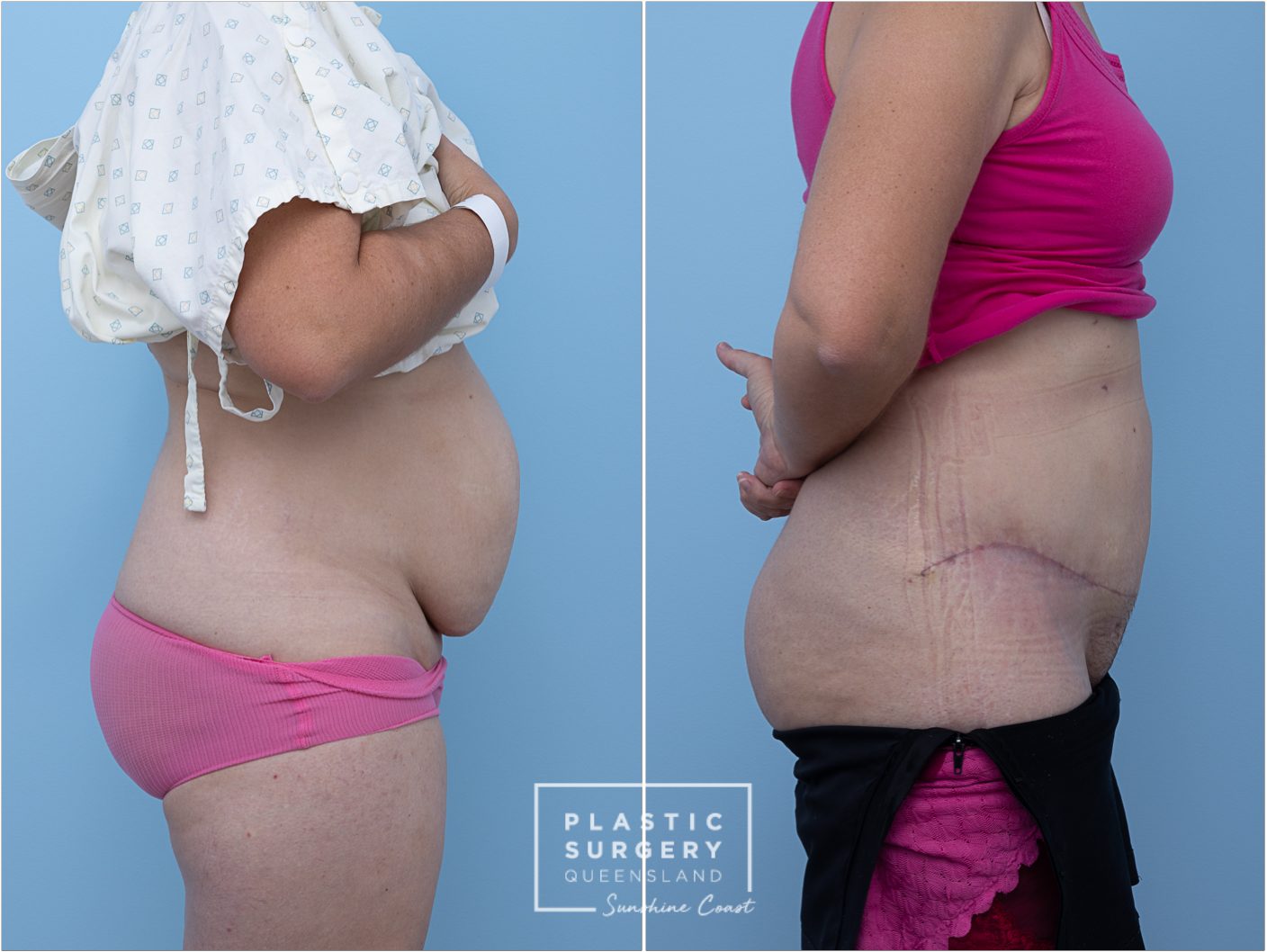
Photograph taken approximately 3 months after surgery. At this stage scars can still appear red and will continue to fade towards a paler, finer line over the following months, and the final shape settles with time. Every patient heals differently and individual results vary.
Abdominoplasty (Tummy Tuck)
Abdominoplasty removes excess abdominal skin and fat while repairing separated muscles (diastasis recti) for improved abdominal contour. Full and mini options are available, tailored to individual needs.
Ideal Candidates
- Post-pregnancy or post-weight-loss patients with loose skin or muscle laxity
- Those in good general health at a stable weight, and non-smokers
- Patients with realistic expectations about scarring and the need for lifestyle maintenance
Procedure Overview
- Performed under general anaesthesia; approximately 2–4 hours in an accredited facility
- Low bikini-line incision; navel repositioned in a full abdominoplasty
- Muscle plication (tightening), skin and fat excision; optional liposuction for contouring
- Mini abdominoplasty available for isolated lower abdominal concerns
- Overnight hospital stay is typical
Recovery & Aftercare
- 2–4 weeks off work; walking is encouraged from day 1
- Drains for 1–2 weeks; compression garment worn for 6 weeks
- No driving or heavy lifting for 2–4 weeks; full activity at 6–8 weeks
- Follow-up appointments weekly initially, then at 3 and 6 months
Risks & Considerations
Risks include infection, seroma, poor scarring, DVT, or temporary numbness. These are mitigated by compression garments, early mobilisation, and specialist surgical standards. Not recommended during active pregnancy planning or significant weight change.
Common Questions
Full vs mini abdominoplasty — which is right for me?
A full abdominoplasty addresses both upper and lower abdomen; a mini targets the lower abdomen only. Suitability is assessed during consultation.
Can I get pregnant afterwards?
Pregnancy is possible but may alter the results. It is generally recommended to complete your family before surgery.
How do I maintain results?
A balanced diet and regular exercise after recovery help maintain your outcome long-term.
This information is general in nature. A personal consultation with Dr Livingston is essential to assess your suitability and discuss individual goals.
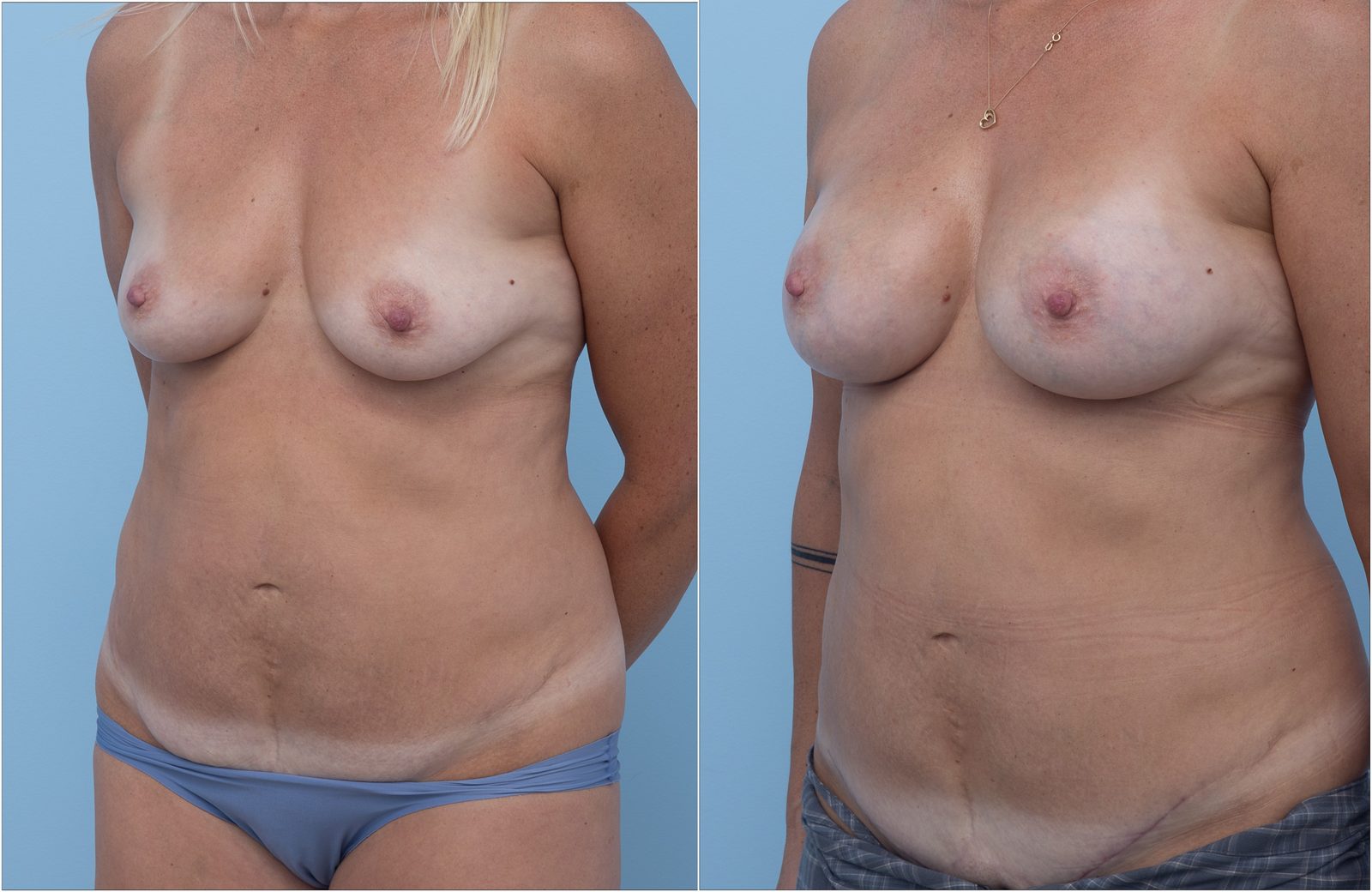
Photograph taken approximately 3 months after surgery. At this stage scars can still appear red and will continue to fade towards a paler, finer line over the following months, and the final shape settles with time. Every patient heals differently and individual results vary.
Breast Augmentation
Breast augmentation enhances breast size and shape using implants or fat transfer, with a customised surgical plan based on body frame and goals.
Ideal Candidates
- Women seeking increased breast volume or improved symmetry
- Post-pregnancy or post-weight-loss volume loss
- Healthy, stable weight, with no active breast disease
Procedure Overview
- General anaesthesia in an accredited facility
- Incision placed inframammary (under breast fold), periareolar, or transaxillary
- Pocket created subglandular or submuscular; implant inserted (silicone or saline)
- Closure in layers; comprehensive pre-operative planning with sizing
Recovery & Aftercare
- Surgical bra worn for 4–6 weeks
- No arms overhead for approximately 2 weeks
- Return to work within approximately 1 week
- Implants settle over 3–6 months
Risks & Considerations
Risks include capsular contracture, implant rupture, infection, rippling, asymmetry, change in nipple sensation, and rare anaplastic large cell lymphoma (BIA-ALCL). Reoperation may be required over time. This is a cosmetic procedure and Medicare rebates do not apply.
Common Questions
What implant types are available?
Silicone or saline implants in various shapes and profiles, discussed during consultation.
Does Medicare cover breast augmentation?
No — this is a cosmetic-only procedure and no rebate applies.
How long do implants last?
Typically 10–20 years. Annual monitoring is recommended.
This information is general in nature. A personal consultation with Dr Livingston is essential to assess your suitability and discuss individual goals.
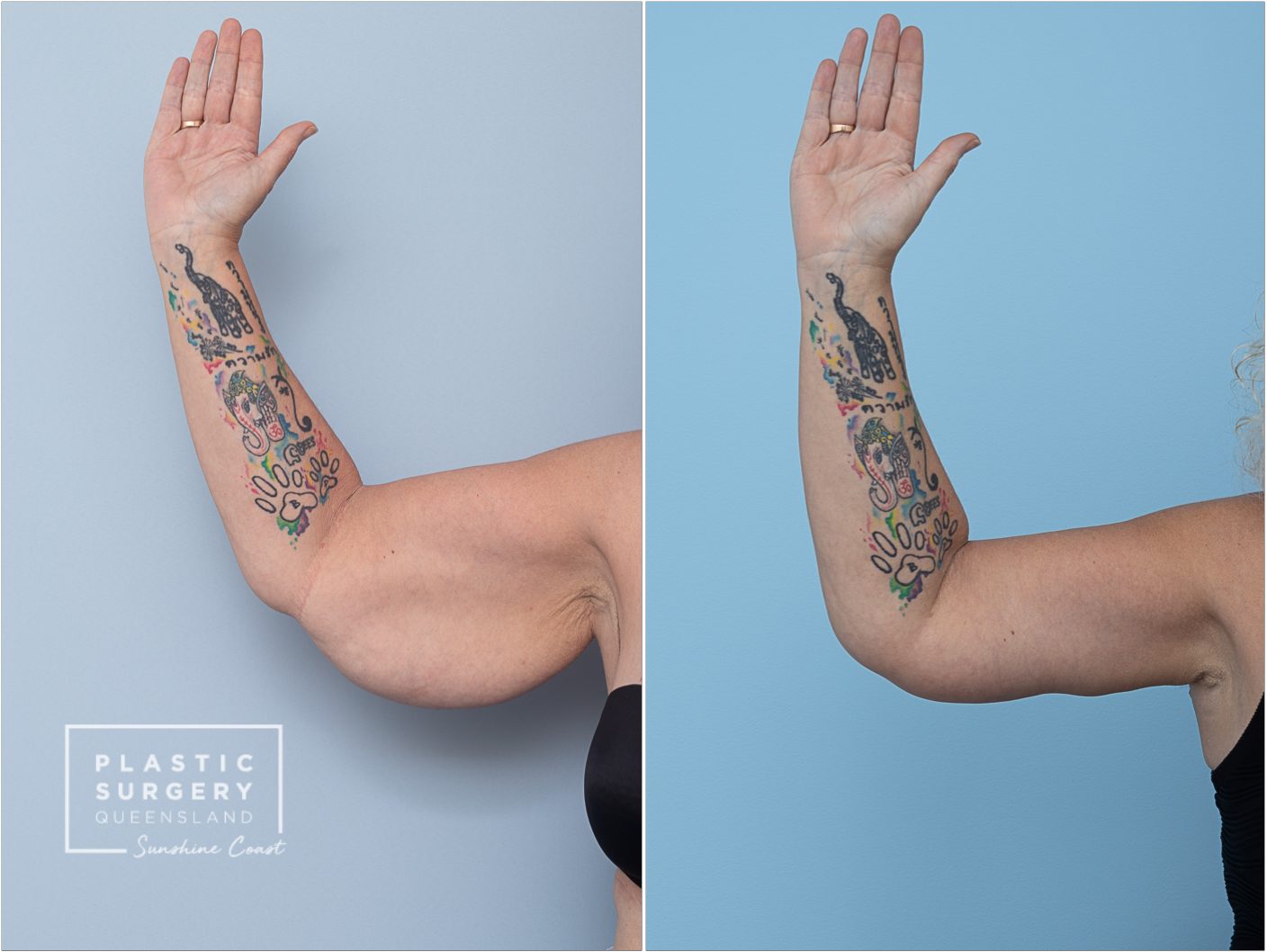
Photograph taken approximately 3 months after surgery. At this stage scars can still appear red and will continue to fade towards a paler, finer line over the following months, and the final shape settles with time. Every patient heals differently and individual results vary.
Arm Lift (Brachioplasty)
Arm lift surgery removes excess skin and fat from the upper arms, improving contour and definition.
Ideal Candidates
- Patients with upper arm skin laxity, often following weight loss
- Those in good general health at a stable weight
- Individuals with realistic expectations regarding scarring
Procedure Overview
- General or regional anaesthesia
- Incision from the elbow to the axilla (armpit); liposuction if indicated
- Excess skin excised and tissues tightened
- Closure with drains as needed
Recovery & Aftercare
- Compression sleeves worn for 4–6 weeks
- Arms kept elevated initially to reduce swelling
- Driving typically permitted after 1 week
- Scars mature over approximately 12 months
Risks & Considerations
Risks include widened scars, infection, seroma, nerve injury, asymmetry, and wound breakdown. Scars are visible and this is discussed thoroughly during consultation.
Common Questions
How long is the scar?
Extends from the elbow to the armpit. Mini versions with shorter incisions may be suitable for some patients.
Is liposuction included?
Often combined with liposuction for optimal contouring.
When can I resume exercise?
Upper body exercise is typically avoided for 6 weeks.
This information is general in nature. A personal consultation with Dr Livingston is essential to assess your suitability and discuss individual goals.
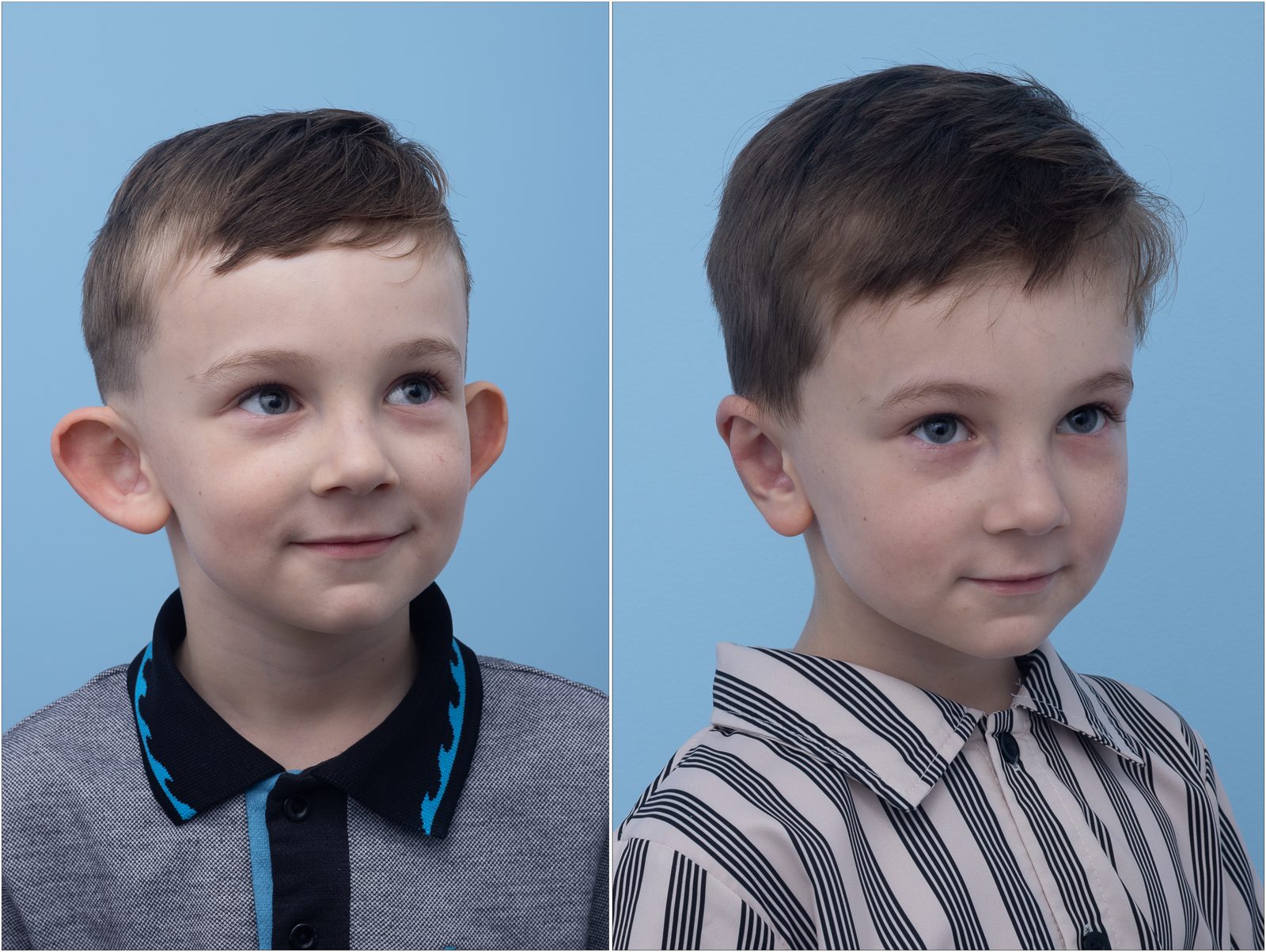
Photograph taken approximately 3 months after surgery. At this stage scars can still appear red and will continue to fade towards a paler, finer line over the following months, and the final shape settles with time. Every patient heals differently and individual results vary.
Ear Surgery (Otoplasty)
Ear reshaping surgery to correct prominent or asymmetric ears, improving natural proportion and balance.
Ideal Candidates
- Children over 5 years of age with prominent or protruding ears
- Adults dissatisfied with ear projection or shape
- Healthy patients without bleeding disorders
Procedure Overview
- General anaesthesia for children; local anaesthesia with sedation for adults
- Incision placed behind the ear
- Cartilage scored and sutured to reshape; skin redraped
- Closure and protective dressing applied
Recovery & Aftercare
- Headband worn for 2–6 weeks, particularly at night
- Swelling reduces in 1–2 weeks
- Contact sports avoided for 6 weeks
- Final shape at 3–6 months
Risks & Considerations
Risks include infection, haematoma, cartilage exposure, asymmetry, suture reaction, over- or under-correction, and scarring. Contact sports post-operatively may risk recurrence.
Common Questions
What is the minimum age?
Ear growth is typically complete around age 5, making surgery suitable from that age.
Are both ears treated?
Often bilateral to achieve symmetry, though single-ear correction is possible.
Does Medicare cover otoplasty?
Possible for congenital ear deformity; eligibility is assessed during consultation.
This information is general in nature. A personal consultation with Dr Livingston is essential to assess your suitability and discuss individual goals.
Ready to Learn More?
The first step is a comprehensive consultation with Dr Livingston to discuss your goals, assess your suitability, and develop a personalised treatment plan.
Medical Disclaimer: Any surgical or invasive procedure carries risks. Before proceeding, you should seek a second opinion from an appropriately qualified health practitioner. Individual results may vary. This website does not contain patient testimonials. All information provided is general in nature and does not constitute medical advice. A consultation with Dr Livingston is required to determine suitability for any procedure.
Medical Disclaimer: All surgery carries risks — consider a second opinion from a qualified practitioner. General information only, not medical advice. A consultation is required to determine suitability.