Breast Reduction
Breast reduction (reduction mammoplasty) reduces breast size by removing excess tissue, fat and skin, and reshaping the breast. It often relieves physical symptoms such as back, neck and shoulder pain and skin irritation, while improving proportion and comfort.
Also known as: Reduction mammoplasty, Breast reduction surgery
Am I a candidate?
- Women experiencing back, neck or shoulder pain, or skin irritation, from large breasts
- Those at a stable weight, non-smokers, with a BMI appropriate for safe surgery
- Adults, post-development, with disproportionate breast size
The procedure
- Performed under general anaesthesia; approximately 2–4 hours depending on volume
- Anchor or lollipop incision patterns to remove tissue and reshape the breasts
- Nipple and areola repositioned; sensation is often preserved
- Liposuction may assist contouring where appropriate
- Hospital stay is typically 1–2 nights
Recovery
- Off work for approximately 2 weeks; no heavy lifting for 6 weeks
- Supportive bra worn for 4–6 weeks; drains usually removed around day 2–3
- Scars typically fade over 12–18 months with appropriate scar care
- Follow-up appointments at 1–2 weeks, 6 weeks and 3 months
Risks & considerations
Risks include poor wound healing, asymmetry, infection, and changes in nipple sensation. Breastfeeding may be affected. These are balanced by specialist expertise and thorough pre-operative planning.
Medicare & rebates
Medicare and private health insurance rebates may apply for symptomatic cases that meet the relevant criteria. Eligibility is assessed during consultation.
Medicare item numbers and eligibility criteria are set by the Australian Government and can change or be revised over time. Your current eligibility is confirmed at your consultation.
Clinical photographs
Educational onlyFor privacy, photographs are blurred by default. Click to view; click again to move through the angles.
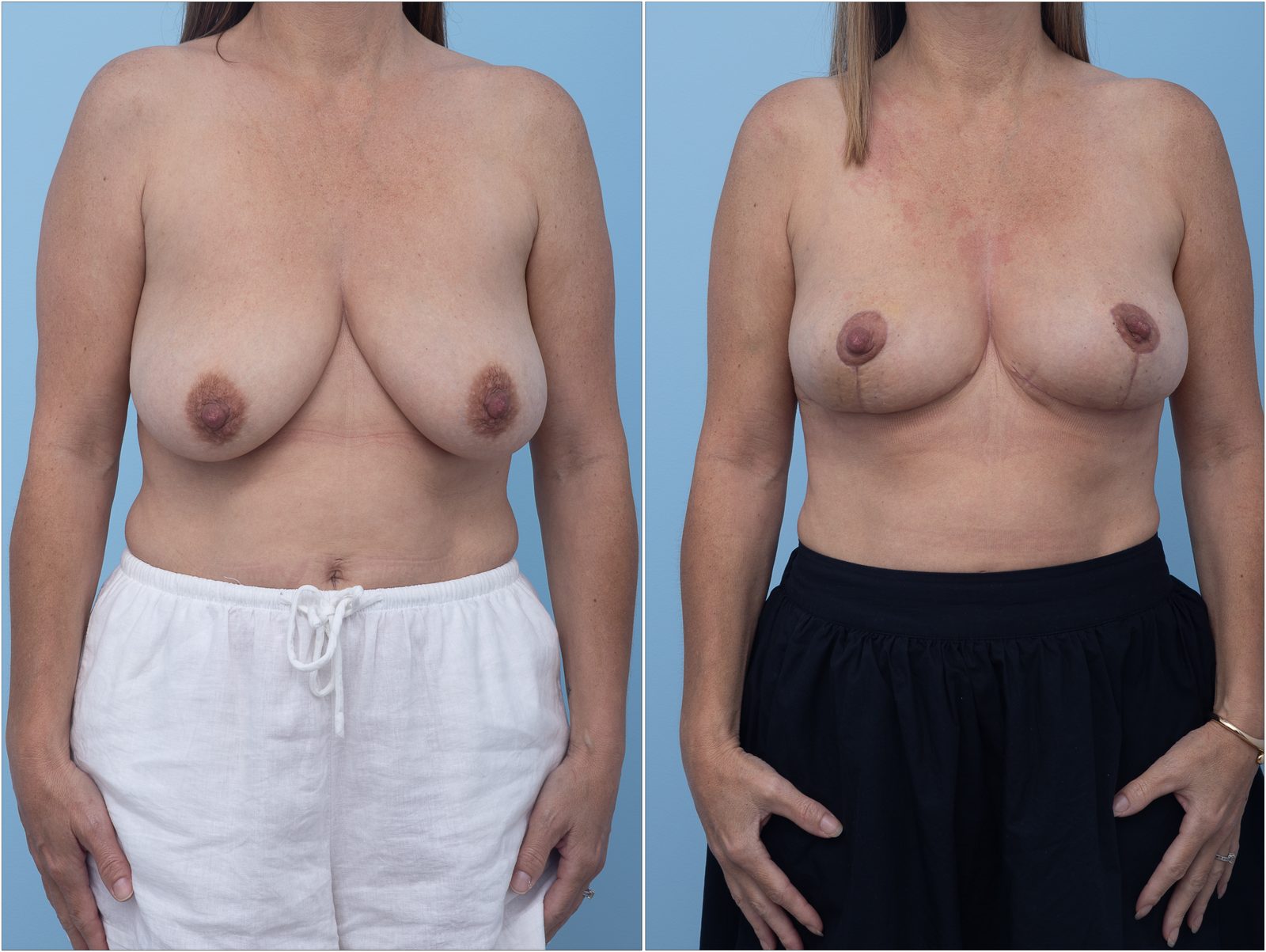
These photographs are published for general educational purposes only and do not constitute medical advice or a guarantee of any particular outcome. Unless otherwise stated, images are taken approximately 3 months after surgery; at this stage scars can still look red and darker, which varies with skin type. Over time they typically settle into a fine line that is usually paler than the surrounding skin, and the final shape settles with time — the timing and final appearance vary with skin type and ethnicity. Every patient is different and individual results vary. All surgery carries risks, and you should seek a second opinion from an appropriately qualified health practitioner. Images are published with the patient’s written consent and have not been altered to misrepresent results. A consultation with Dr Livingston is required to determine your suitability for any procedure. Dr Ryan Livingston is an AHPRA-registered Specialist Plastic Surgeon (MED0001523680).
Frequently asked questions
Will breastfeeding be possible after a breast reduction?
Breastfeeding may be affected. This is discussed in detail during your consultation.
What size will I be afterwards?
Final size is personalised based on your goals, body proportions and anatomy.
Are the scars noticeable?
Incisions are placed discreetly and typically improve significantly over time with appropriate care.
Does Medicare cover breast reduction?
A rebate may apply for symptomatic cases meeting the criteria. Eligibility is assessed during consultation.
This information is general in nature and does not constitute medical advice. Any surgical or invasive procedure carries risks; you should seek a second opinion from an appropriately qualified health practitioner. Individual results vary. A consultation with Dr Livingston is required to determine your suitability for any procedure. Dr Ryan Livingston is an AHPRA-registered Specialist Plastic Surgeon (MED0001523680).